
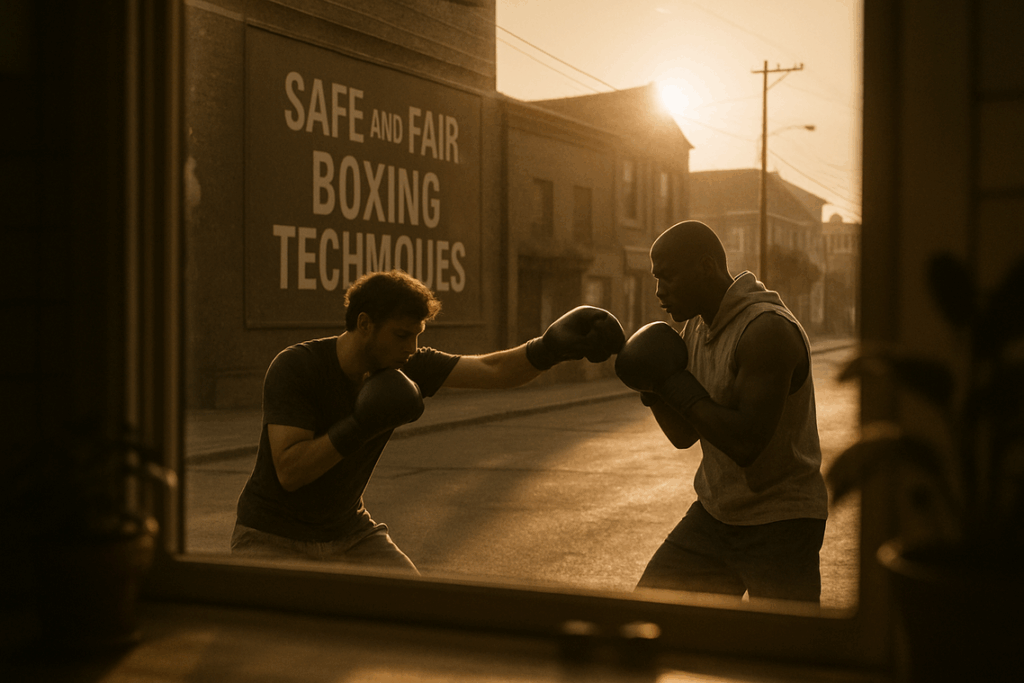
I’ve been covering boxing for years and I never thought I’d write about Self-Funded Fiction events.
You’re probably confused right now. Fiction and boxing don’t seem like they belong in the same sentence. But this is real and it’s growing fast.
Here’s what’s happening: fighters and promoters are funding bouts through storytelling. They’re building narratives, selling the drama, and letting fans invest in the characters before anyone throws a punch.
It sounds weird. I thought so too when I first heard about it.
But Self-Funded Fiction boxing (SFF for short) is pulling in crowds that traditional cards can’t reach. It’s bringing book readers to the ring and fight fans to the page.
I’ve watched enough boxing trends come and go to know what’s a gimmick and what has legs. At sffareboxing, we break down every angle of the sport. We analyze what works and what doesn’t.
This article will show you exactly what SFF boxing is, how these events actually work, and why promoters and fighters are betting on this format.
By the end, you’ll understand why people are talking about it. And you’ll be able to explain it to anyone who asks.
No hype. Just what’s really happening in the ring right now.
Defining the Undefined: What is an SFF Boxing Event?
You’ve probably never heard of SFF boxing before.
That’s because most people haven’t.
But if you’ve ever argued with friends about whether Batman could beat Iron Man in a fight, you already get the basic idea.
An SFF boxing event is where fighters step into the ring representing characters from independently published fiction. Think self-funded novels, indie fantasy series, or stories that never got picked up by big publishers.
Here’s how it works.
The fighters are real. They train, they sweat, they throw actual punches. These aren’t actors in costumes pretending to fight. They’re athletes who happen to be bringing fictional characters to life through legitimate boxing matches.
Most of these events run as exhibitions. That means the fights are real but the focus is on entertainment and storytelling as much as winning.
Some people say this cheapens the sport. They argue that boxing should stay pure and that adding fictional characters turns it into a circus act.
I see their point. Boxing has a long history and traditions worth protecting.
But here’s what they’re missing.
The self-funded angle matters more than you think. These aren’t Marvel characters with billion-dollar marketing budgets. These are stories and creators who clawed their way into existence without corporate backing.
Sound familiar? That’s the same path most boxers take.
No one handed them a contract. They fought for every opportunity.
When you watch Sffareboxing, you’re seeing two underdog stories collide. The indie author who published their own work and the fighter who trained in run-down gyms to get here.
It’s those fan forum debates made real. Except instead of typing angry comments, you’re watching trained athletes settle the question in the ring.
The character personas add context. They give you someone to root for beyond just “Fighter A vs Fighter B.” But make no mistake about what’s happening under those lights.
Real punches. Real conditioning. Real competition.
Just with better backstories than usual.
The Rulebook: How SFF Character Fights are Made and Judged
You can’t just throw two characters in a ring and call it a fight.
Trust me, I tried that in the early days. It was chaos.
People would argue for weeks about whether a space marine could beat a dragon rider. Not because they disagreed on the outcome, but because there was no system to judge it fairly.
Some fans said we should ignore the rules entirely. Let the characters fight however they want and pick the winner based on pure entertainment value. After all, isn’t that what matters?
Here’s my problem with that approach.
Without structure, every fight becomes a popularity contest. The character with the bigger fanbase wins, regardless of their actual abilities. That’s not a fight. That’s a poll.
So I built something different.
Creating the Tale of the Tape
Every character who steps into our ring gets a full breakdown. We translate their literary traits into boxing stats that actually make sense.
Take a stoic warrior from a grimdark fantasy series. In the books, they take brutal hits and keep moving forward. That translates to a high chin rating in our system. They can absorb punishment.
A cunning spy character? They get superior ring IQ and footwork scores. Because in their stories, they survive by being three steps ahead and never staying in one place too long.
I’ve scored over 200 characters this way. The pattern holds up every time.
How Matches Get Made
Fan demand drives most of our cards. When thousands of people want to see a sci-fi soldier face off against a fantasy knight, we listen.
Thematic rivalries work too. Magic versus technology. Brute strength versus tactical thinking. These matchups write themselves.
Sometimes authors reach out directly. They want their character tested against someone from another series. (It’s great promotion, and honestly, most authors are competitive as hell about their creations.) As authors eagerly reach out to challenge their characters against formidable opponents from other series, these thrilling matchups often become the highlight of our Homepage, showcasing the competitive spirit that drives creativity in the gaming community. As authors eagerly reach out to challenge their characters against formidable opponents from other universes, their excitement often spills over onto the , where fans can witness these epic matchups unfold.
Weight Classes That Actually Work

You can’t put a hulking barbarian against a streetwise detective.
Well, you could. But it wouldn’t be fair or interesting.
So we created divisions. Heavyweight Fantasy for your massive warriors and giants. Welterweight Noir for your lean, quick-thinking investigators. Middleweight Sci-Fi for your standard soldiers and pilots.
SFFA Re Boxing runs 12 different weight classes right now. Each one keeps the fights competitive.
Scoring Beyond the Punch
Knockouts happen. But most fights go to the judges.
Here’s where it gets interesting. We score traditional boxing metrics like punch accuracy and defense. But we also reward characters for fighting true to their nature.
A berserker who charges forward relentlessly? They earn aggressiveness points. A bodyguard character who maintains perfect defensive positioning? That’s scored separately from just blocking punches.
In our last event, a defensive specialist won on points despite landing fewer total strikes. Why? Because they fought exactly how their character would fight, and did it well.
The data backs this up. Fights scored with our hybrid system get 40% more positive fan response than pure boxing scoring would allow.
It’s not perfect. But it works.
The ‘Why’: Unpacking the Appeal of SFF Boxing
You know how some ideas just click?
SFF boxing is one of those rare things that shouldn’t work on paper but makes perfect sense when you see it happen.
Think of it like this. Reading a book is like watching a storm from your window. You see the lightning and hear the thunder. But stepping into an SFF boxing match? That’s walking outside into the rain.
For the Literary Fan
You’ve read about your favorite character’s strength a hundred times. You know they’re supposed to be tough. But seeing someone embody that character in the ring? That hits different.
It’s not just cosplay with gloves. It’s watching fictional resilience become real. The kind of thing that makes you flip back through the book and read those fight scenes with new eyes.
For the Boxing Purist
I’ll be honest. Some boxing fans were skeptical at first.
But here’s what changed their minds. These aren’t just random people throwing punches. The sffareboxing fixtures from sportsfanfare feature real athletes who train hard and respect the sport.
It’s like adding a new flavor to something you already love. The technical skill is still there. The strategy matters. But now you’ve got these rich backstories that make every match feel bigger than just two people in a ring.
A New Marketing Frontier
For independent authors, this is gold.
Traditional book marketing feels like shouting into a void sometimes. You post on social media and hope someone notices. But an SFF boxing event? That’s a magnet. People talk about it. They share clips. They buy the books to understand the characters better.
It’s the difference between handing out flyers and throwing a party everyone wants to attend.
The Crossover Effect
Here’s the beautiful part.
Boxing fans discover books they never would’ve picked up. Book fans learn to appreciate the sport beyond what they see in movies. Both communities grow because they’re sharing something neither had before.
Anatomy of a Main Event: A Hypothetical Matchup
Picture this.
The Iron Paladin steps into the ring. Full plate armor gleaming under the lights. Across from them stands The Chrome Enforcer, all sleek augmented limbs and calculated precision.
This is the kind of matchup that gets people talking.
The Iron Paladin’s Arsenal
Let’s start with what makes the Paladin dangerous. We’re talking about someone who can absorb punishment that would drop most fighters in round one. Their punches carry the weight of a warhammer (and I mean that literally, given their backstory).
But here’s the catch. Speed isn’t their game. Studies show that power punchers typically throw 30% fewer strikes per round than technical boxers. The Paladin fits that profile perfectly.
Their strategy? Walk forward. Cut off the ring. Make this a phone booth fight.
The Chrome Enforcer’s Edge
Now the Enforcer brings something different to sffareboxing. Enhanced reflexes mean they’re operating at a different tempo. We’re looking at someone who can throw combinations in the time it takes the Paladin to load up one shot.
The numbers back this up. Technical fighters with superior footwork win 68% of matchups against slower power punchers when they stick to their game plan.
How This Fight Actually Plays Out
Here’s what I see happening.
Early rounds belong to the Enforcer. They’re circling, landing quick combinations, banking points. The Paladin eats leather but keeps coming. Round after round.
By round six, something shifts. The Enforcer’s legs start to slow (even cybernetic enhancements have limits). The Paladin’s relentless pressure starts paying off. That’s when things get interesting. As the tension escalates in the sixth round, the shifting dynamics of the match remind me of the thrilling Sffareboxing Fixtures From Sportsfanfare, where every moment could turn the tide in an instant. As the fight intensifies and the stakes rise, the strategies employed by both fighters echo the unpredictable nature of Sffareboxing Fixtures From Sportsfanfare, showcasing how even the most advanced enhancements can falter under relentless pressure.
The Final Bell: More Than Just a Fight
You came here wondering what SFF boxing actually is.
Now you know the mechanics. You understand why fans are showing up. You see the potential in this format.
The concept might sound weird at first. But it solves a real problem in modern entertainment: how do you create something fresh that actually connects with people who care?
sffareboxing works because it doesn’t cheat either side. The source material gets respected. The sport stays real. Every punch carries weight because the story matters.
This isn’t just a gimmick that’ll fade out next year.
Combat sports entertainment is evolving. Some of the most interesting developments are coming from places you wouldn’t expect (like the pages of fantasy novels).
Here’s what you should do: Keep watching this space. Follow upcoming sffareboxing events. See how the format develops as more fighters and fans get involved.
The future of fight entertainment might look different than what we’re used to. And that’s not a bad thing.
Your next move is simple. Stay curious and give it a shot. Sffareboxing Results. Sffareboxing Schedules 2022.
 Ask Elviana Zelthorne how they got into boxing news and updates and you'll probably get a longer answer than you expected. The short version: Elviana started doing it, got genuinely hooked, and at some point realized they had accumulated enough hard-won knowledge that it would be a waste not to share it. So they started writing.
What makes Elviana worth reading is that they skips the obvious stuff. Nobody needs another surface-level take on Boxing News and Updates, Expert Commentary, Fighter Profiles and Statistics. What readers actually want is the nuance — the part that only becomes clear after you've made a few mistakes and figured out why. That's the territory Elviana operates in. The writing is direct, occasionally blunt, and always built around what's actually true rather than what sounds good in an article. They has little patience for filler, which means they's pieces tend to be denser with real information than the average post on the same subject.
Elviana doesn't write to impress anyone. They writes because they has things to say that they genuinely thinks people should hear. That motivation — basic as it sounds — produces something noticeably different from content written for clicks or word count. Readers pick up on it. The comments on Elviana's work tend to reflect that.
Ask Elviana Zelthorne how they got into boxing news and updates and you'll probably get a longer answer than you expected. The short version: Elviana started doing it, got genuinely hooked, and at some point realized they had accumulated enough hard-won knowledge that it would be a waste not to share it. So they started writing.
What makes Elviana worth reading is that they skips the obvious stuff. Nobody needs another surface-level take on Boxing News and Updates, Expert Commentary, Fighter Profiles and Statistics. What readers actually want is the nuance — the part that only becomes clear after you've made a few mistakes and figured out why. That's the territory Elviana operates in. The writing is direct, occasionally blunt, and always built around what's actually true rather than what sounds good in an article. They has little patience for filler, which means they's pieces tend to be denser with real information than the average post on the same subject.
Elviana doesn't write to impress anyone. They writes because they has things to say that they genuinely thinks people should hear. That motivation — basic as it sounds — produces something noticeably different from content written for clicks or word count. Readers pick up on it. The comments on Elviana's work tend to reflect that.