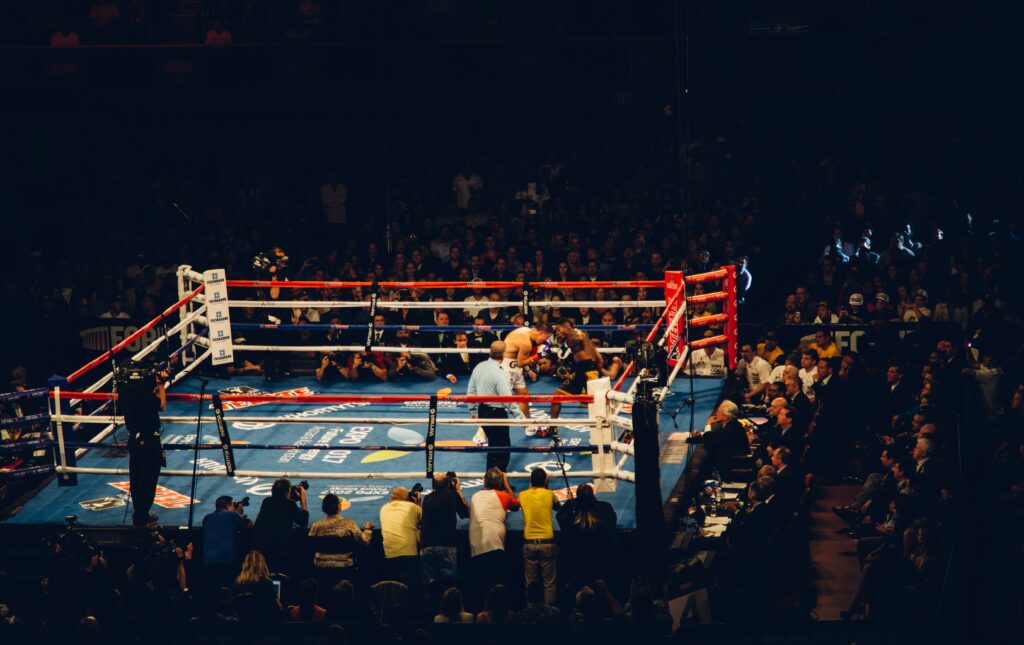

Main Card Standouts
The headline bout lived up to the hype, delivering five gritty rounds that swung momentum back and forth. Round one started tight. Fighter A took center, managing range with stiff jabs and low kicks off both legs. Fighter B absorbed early pressure and looked a step behind.
Round two changed everything. Fighter B found rhythm with inside counters, slipping jabs and snapping back with sneaky hooks. Fighter A’s pace dipped; hesitation set in.
By round three, it was a war of wills. Both traded in the pocket, with Fighter A recovering some ground thanks to improved angles and a timely takedown late in the round.
Round four was the tipping point. Fighter B turned up the heat, battering tight guard with elbows and clinch knees. Fighter A couldn’t breathe literally or tactically. Every forward step came at a cost.
In round five, Fighter B coasted smart, circling out of danger and flicking counter shots to keep space. Fighter A pressed forward but lacked the snap needed to steal the fight back.
Tactically, Fighter B’s mid fight shift to high pressure counters and clinch fighting took the edge. Fighter A stayed technical but flat footed, with not enough urgency late.
Grade time:
Fighter B: A weathered early storm, shifted game plan mid fight, and broke the opponent down round by round.
Fighter A: C+ slick start, but pace management fell apart under pressure.
A bout to remember. Not perfect, but brutal and honest just the way fight nights should be.
Undercard Upsets
Nobody saw Garcia flipping the script in the second round, but that’s exactly what happened. Coming in as a late replacement, he stunned a seasoned vet with tight counters and a jab that kept finding its mark. No viral hype, no big camp backing him just clean fundamentals and hunger.
Then there was Mei Lin, who outlasted a gritty grinder in a three round war. She walked in with a 2 2 record, mostly overlooked, but walked out with the crowd chanting her name. Her timing was near perfect, and even on the back foot, she looked composed.
For both fighters, these wins weren’t just personal milestones they cracked open the rankings. Garcia will likely leapfrog into contender conversations, especially with injuries shaking up his division. Mei Lin, with her win, pushes for a rematch against a top 10 gatekeeper she narrowly lost to last year. These shifts create traffic at the top and force veterans to recalibrate. Nothing resets a weight class like an upset.
Technical Breakdown

This card wasn’t won with flashy haymakers it was the small details that carved out the wins. The cleanest combos came from fighters who stayed sharp with 1 2s and snuck in lead hooks off the jab reset. Combo of the night? Probably Torres’ low kick to right cross to clinch sequence. It rocked tempo and drew damage without overcommitting.
On the counter side, Marquez made a case study of patience rolling under hooks and landing laser straight uppercuts. His timing broke down forward pressure cleanly. Counter strikes weren’t just highlight reel material; they flipped fight momentum round by round.
Footwork was night and day between winners and losers. The victors kept it tight short steps, efficient angles, constant resets. Most of the losses came from chasing, crossing up the stance, or circling predictably and getting timed. Inside the clinch, grip fighting and dirty boxing dictated control. Ramos used sneaky underhooks and head positioning to stall and score.
Gas tanks got tested too. Fighters that slowed by round two paid hard especially in matchups where pace dictated dominance. Fatigue revealed who had depth behind their offense and who didn’t have a plan past the first blitz.
Corner strategies ran the full spectrum. Some stuck to basics distance control, head movement, mental composure. Others tried switching stances or forcing brawls that didn’t fit their fighter’s frame. In short: coaches who adapted on the fly walked away with momentum; those who held too rigid lost rounds they didn’t need to.
Nice combos can win a round. Smart corners and clean footwork win fights.
Medical Timeouts and Controversial Calls
Last week’s card didn’t pass without sparks outside the gloves. The most talked about moment came in Round 3 of the co main event, when the referee stepped in to stop the action after a questionable eye poke. Replays were inconclusive a glancing swipe rather than a clean jab but the timeout stalled the momentum for the fighter who had his opponent backed against the cage. Fans weren’t happy, and neither was his corner. The call shifted the rhythm, and by the time the break ended, so had his advantage.
There was also a late stoppage debate in the featherweight bout earlier in the night. One fighter took four unanswered elbows on the ground before the ref jumped in. Too late? Too cautious? Depends on who you ask. Ringside coaches on both sides had words post fight, calling for clearer guidelines and better consistency across officiating.
Injury wise, the middleweight opener saw a shoulder pop that ended things fast and not the way either fighter wanted. What was shaping up to be a gritty stand up battle turned into a TKO via medical stoppage after an awkward takedown attempt went sideways. No foul play, just bad luck. The injured fighter showed up for post fight interviews anyway, keeping it professional, but the frustration came through clearly.
Between the ref decisions and sideline tape jobs, the night reminded everyone that fights aren’t just won by skill they’re also shaped by split second judgment calls. Fighters can prep for opponents. It’s the unexpected stoppages and borderline calls that keep corners on edge.
What It All Means Moving Forward
Last week’s card wasn’t just action packed it was revealing. A few names moved from “promising” to “problem.” Keep your eyes on Marco Tevez. After a cold blooded performance in the third round, he’s no longer a sleeper in the welterweight mix. Same goes for Alina Park. Her precision under pressure looked more like a title contender than a prospect. If she keeps this pace, she’s two fights out from a gold shot, max.
The title picture just got more complicated. Tevez could make things very awkward for the current #2 contender if the booking lines up right. Meanwhile, veterans like Santos might be seeing their final title window narrowing, especially after that flat, foot heavy showing. The grind doesn’t wait.
As ripple effects go, today’s schedule already ties directly back to what we just saw. Fighters in similar divisions will either take the baton or lose pace completely. Keep an eye on today’s fight fixtures. How these play out will tell us exactly who stays in the conversation. The map’s shifting. Stay tuned.
Stay Ready for the Next Bell
The best way to see what’s coming isn’t always in the main event but in the way fighters prepare. Ringside last week, one thing was clear: training camps are getting sharper, more specialized, and built around short bursts of intensity. Think less volume, more precision. Fighters are honing specific combos tailored to likely matchups, drilling them until they’re automatic. There’s also a tactical shift happening emphasis is growing on adaptability during rounds, with corner teams prepping fighters for plan B and C, not just plan A.
Strength and conditioning is shedding old school weight cuts for smarter recovery protocols. More fighters are walking into the cage looking fluid, not flat. You could feel it in the final rounds those who managed their gas tanks with pacing drills had an edge over those still relying on grind it out camps.
Want to see how this plays out in real time? Missed last week’s action? Don’t worry. Check today’s fight fixtures to keep your eye on rising trends and the next generation of contenders.
 Roberto Lukeroddes has opinions about match recaps and analysis. Informed ones, backed by real experience — but opinions nonetheless, and they doesn't try to disguise them as neutral observation. They thinks a lot of what gets written about Match Recaps and Analysis, Training Tips and Techniques, Upcoming Fights and Events is either too cautious to be useful or too confident to be credible, and they's work tends to sit deliberately in the space between those two failure modes.
Reading Roberto's pieces, you get the sense of someone who has thought about this stuff seriously and arrived at actual conclusions — not just collected a range of perspectives and declined to pick one. That can be uncomfortable when they lands on something you disagree with. It's also why the writing is worth engaging with. Roberto isn't interested in telling people what they want to hear. They is interested in telling them what they actually thinks, with enough reasoning behind it that you can push back if you want to. That kind of intellectual honesty is rarer than it should be.
What Roberto is best at is the moment when a familiar topic reveals something unexpected — when the conventional wisdom turns out to be slightly off, or when a small shift in framing changes everything. They finds those moments consistently, which is why they's work tends to generate real discussion rather than just passive agreement.
Roberto Lukeroddes has opinions about match recaps and analysis. Informed ones, backed by real experience — but opinions nonetheless, and they doesn't try to disguise them as neutral observation. They thinks a lot of what gets written about Match Recaps and Analysis, Training Tips and Techniques, Upcoming Fights and Events is either too cautious to be useful or too confident to be credible, and they's work tends to sit deliberately in the space between those two failure modes.
Reading Roberto's pieces, you get the sense of someone who has thought about this stuff seriously and arrived at actual conclusions — not just collected a range of perspectives and declined to pick one. That can be uncomfortable when they lands on something you disagree with. It's also why the writing is worth engaging with. Roberto isn't interested in telling people what they want to hear. They is interested in telling them what they actually thinks, with enough reasoning behind it that you can push back if you want to. That kind of intellectual honesty is rarer than it should be.
What Roberto is best at is the moment when a familiar topic reveals something unexpected — when the conventional wisdom turns out to be slightly off, or when a small shift in framing changes everything. They finds those moments consistently, which is why they's work tends to generate real discussion rather than just passive agreement.